Spa Facial Types That Actually Transform Your Skin — A Straight-Talk Guide
By the Euphoria & Co. Skincare Team
Walk into any reputable spa and the facial menu reads like a wine list — dozens of options, mysterious names, and price points that range from accessible to eye-watering. Spa facial types have multiplied over the past decade because skin science has advanced rapidly, giving estheticians sharper tools and better formulations than ever before. But more choice creates more confusion.
So before you book your next appointment through our online scheduling page, let’s walk through them together — treatment by treatment, skin type by skin type — so you pick the facial that actually matches what your skin is asking for right now.
Why Knowing Your Spa Facial Types Matters
A facial is not a one-size-fits-all experience. Your friend raves about a chemical peel that left her glowing — but the same peel on rosacea-prone skin could trigger a week-long flare. The difference between a transformative session and a disappointing one nearly always comes down to matching the right facial type to the right skin condition at the right time of year.
Skin changes. It shifts with hormones, seasons, stress, diet, and age. The facial that worked brilliantly for you at 28 might be completely wrong at 42. A good esthetician reads your skin fresh every single visit — and that reading determines which of the many spa facial types will deliver genuine results rather than just a pleasant hour on the table.
Insider Tip: Tell your esthetician about any new medications, recent sun exposure, or skincare products you’ve started in the past month. Retinol users, for instance, need adjusted exfoliation levels — skipping this conversation is the number-one cause of post-facial irritation.
The Major Spa Facial Types — Broken Down
Below is a category-by-category breakdown. Some of these overlap — a hydrating facial might include light exfoliation, a brightening treatment might use both chemical and enzyme methods. Think of these as families of technique rather than rigid boxes.
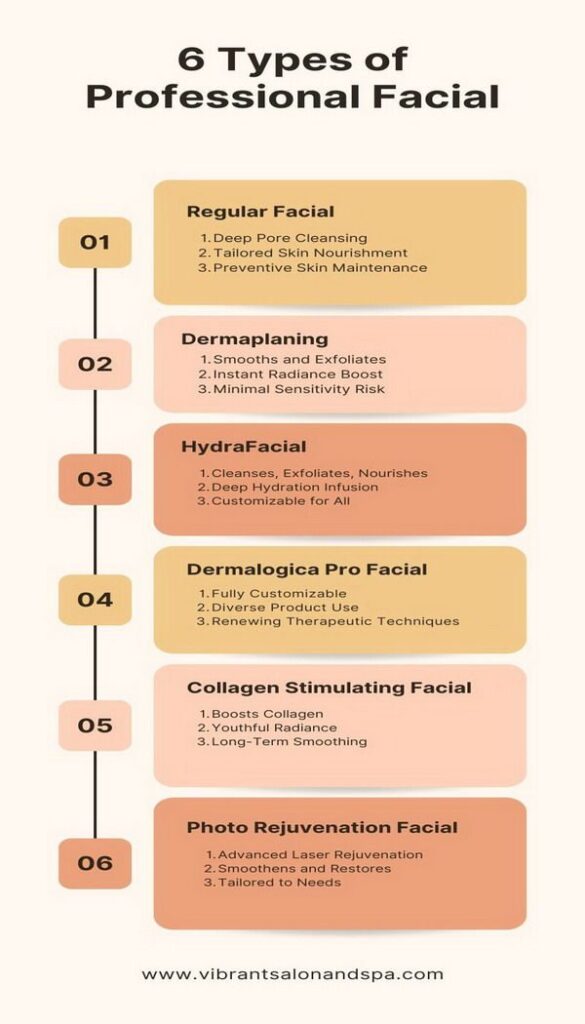
1. Classic European Facial
The foundation that every other facial builds upon. Cleanse, steam, exfoliation, extractions (optional), mask, moisturizer. It lasts 60 to 75 minutes and addresses general maintenance. If you’ve never had a professional facial, start here. It gives your esthetician a baseline reading of your skin’s behavior under controlled conditions — how it responds to steam, how easily pores release, how quickly redness subsides.
2. Deep-Cleansing / Purifying Facial
Built for oily, congested, acne-prone skin. Emphasis shifts toward thorough extraction work, antibacterial masks (often clay or sulfur-based), and high-frequency current to kill surface bacteria. Not glamorous. Sometimes uncomfortable. But three sessions spaced two weeks apart can clear persistent congestion that no drugstore product touches. We see dramatic turnarounds with this approach in our treatment menu.
3. Hydrating / Moisture-Barrier Facial
Dehydrated skin looks dull, feels tight, and fine lines appear deeper than they actually are. A hydration-focused facial uses hyaluronic acid serums, ceramide-rich masks, and sometimes oxygen infusion to flood the upper dermis with moisture. Results are immediate — you look rested, plumped, noticeably fresher. This is the go-to before a big event or after long-haul travel.
4. Anti-Aging / Collagen-Stimulating Facial
Targets fine lines, loss of firmness, and uneven texture through peptide serums, LED light therapy (red wavelengths at 630-660nm), microcurrent muscle toning, or retinoid application. Results build over a series — typically four to six sessions. A single treatment gives a temporary lift; consistent sessions trigger actual collagen remodeling measured in weeks and months.
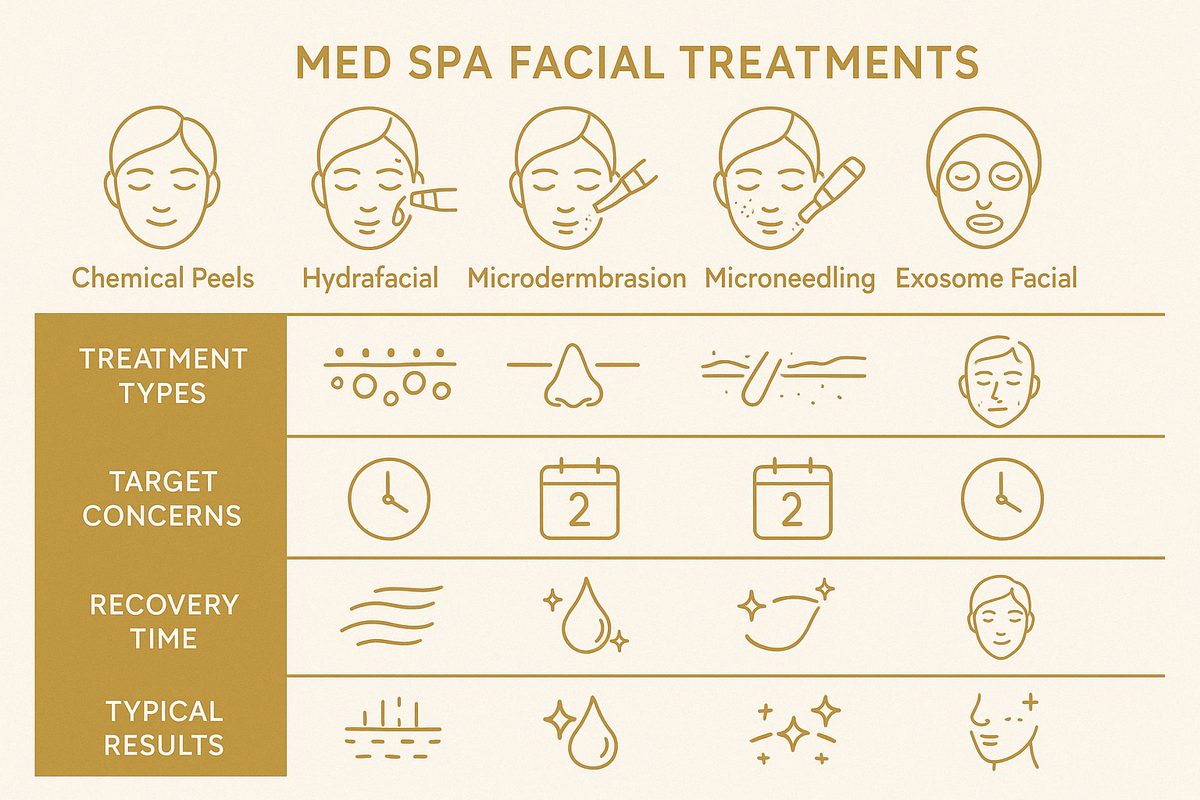
5. Chemical Peel Facial
AHAs (glycolic, lactic), BHAs (salicylic), or TCA at varying concentrations dissolve the bonds between dead cells, forcing accelerated turnover. Light peels (20-30% glycolic) cause mild flaking for a day or two. Medium peels require three to five days of genuine peeling. The payoff — smoother texture, reduced hyperpigmentation, minimized pore appearance — makes it one of the most results-driven spa facial types available.
6. Brightening / Pigmentation-Correcting Facial
Vitamin C serums, kojic acid, niacinamide, and arbutin work together to inhibit tyrosinase — the enzyme responsible for melanin overproduction. Combined with gentle exfoliation and a targeted mask, this facial fades sun spots, post-inflammatory marks, and melasma patches over a treatment series. SPF compliance afterward is non-negotiable; skip sunscreen and you undo half the work.
7. Sensitive Skin / Barrier-Repair Facial
No acids. No high-frequency. No aggressive extractions. This facial uses centella asiatica, oat-based masks, aloe, and soothing LED (amber wavelengths) to calm reactive, rosacea-prone, or eczema-adjacent skin. The goal is to strengthen the moisture barrier without triggering inflammation — a balancing act that requires genuine expertise from the esthetician.
8. HydraFacial / Aqua-Infusion Facial
A device-driven treatment using vortex suction to simultaneously cleanse, exfoliate, extract, and infuse serums. Zero downtime. Visible results in 30 minutes. It has become one of the most requested spa facial types globally because it delivers instant gratification without irritation. Best suited for maintenance rather than deep correction — think of it as a professional-grade reset between more intensive treatments.
Comparing Spa Facial Types: Quick-Reference Table
Choosing the Right Facial for Your Skin Concern
Forget choosing by name recognition or trending status. Start with your primary concern, then match it to the facial category that targets that issue most directly.
Real Talk: If an esthetician recommends the same facial to every single client, that’s a red flag. Skin is individual. The best practitioners adjust products, techniques, and timing based on what they see under the magnifying lamp that day — not what’s trendy on social media.
Seasonal Considerations for Spa Facial Types
Your skin behaves differently in January than it does in July. Smart facial scheduling accounts for this.
Fall and Winter are ideal for chemical peels and brightening treatments. Less UV exposure means lower risk of post-inflammatory hyperpigmentation. This is the season to tackle sun damage accumulated over summer, address texture issues, and invest in collagen-stimulating treatments that need multiple sessions.
Spring and Summer call for lighter, hydration-focused work. HydraFacials, gentle enzyme treatments, and moisture-barrier facials pair well with increased sun exposure. Save aggressive exfoliation for cooler months unless you’re committed to rigorous daily sunscreen application — and most people, honestly, are not as consistent with SPF as they think.
Browse our current seasonal offerings on the Euphoria & Co. blog for treatment spotlights updated monthly.
What to Expect During Your First Professional Facial
Nerves are normal. Here’s the sequence most spa facial types follow, give or take:
- Consultation (5-10 min) — skin history, concerns, product usage, allergies
- Double cleanse — oil-based first to dissolve makeup/SPF, then water-based for deep clean
- Skin analysis — magnifying lamp or Wood’s lamp to assess damage not visible to the naked eye
- Exfoliation — mechanical (scrub/microdermabrasion) or chemical (acid/enzyme), chosen based on skin type
- Steam and/or extractions — softens debris, allows controlled removal of blackheads
- Treatment serums — active ingredients targeted to your concern (vitamin C, peptides, niacinamide)
- Mask — 10-15 minutes of targeted treatment (hydrating, purifying, or soothing)
- Moisturizer + SPF — always, regardless of facial type or time of day
The whole experience runs 60 to 90 minutes. Arrive with a clean face if possible — it saves time and lets the esthetician start with assessment rather than makeup removal. Consider booking a pamper party package if you want to share the experience with friends on a first visit.
Post-Treatment Note: Redness lasting 2-4 hours is normal after most facials. Redness lasting 48+ hours is not. Contact your spa if you experience prolonged irritation, swelling, or breakouts that worsen rather than improve over 72 hours.
How Often Should You Get Each Facial?
Frequency depends on the intensity of the treatment and your skin’s recovery capacity. Over-treating is a real problem — especially with exfoliating facials. Damaged barriers take weeks to rebuild, and stacking treatments too close together creates a cycle of irritation that mimics the very problems you’re trying to solve.
For most adults with healthy skin, a professional facial every four to six weeks aligns with the skin’s natural turnover cycle (approximately 28 days, slowing with age). Active acne or hyperpigmentation protocols may call for bi-weekly sessions for a limited series, then transitioning to monthly maintenance.
Red Flags: When a Facial Isn’t Right for You
Not every facial is safe for every person at every moment. Postpone or avoid professional facials if you have:
- Active cold sores (herpes simplex) — facial manipulation can spread the virus across the face
- Sunburn or windburn — compromised barrier cannot tolerate additional stimulation
- Recent injectable treatments (Botox, fillers) — wait at least two weeks
- Open wounds, active eczema flare, or impetigo
- Accutane use within the past six months — skin is too thin for exfoliation or extractions
A responsible esthetician will ask about all of these during intake. If they don’t ask, you should volunteer the information. And if they proceed despite contraindications — leave. Your skin is not worth the risk.
Frequently Asked Questions About Spa Facial Types
Q: Which spa facial type is best for someone who has never had a facial before?
Start with a Classic European Facial. It covers all the fundamentals — cleansing, mild exfoliation, hydration — without aggressive active ingredients. Your esthetician can assess how your skin responds and recommend a more targeted treatment for your second visit.
Q: Can I combine two different facial types in one session?
Skilled estheticians do this routinely — a light peel followed by a hydrating mask, or extractions paired with LED therapy. The key is layering compatible treatments. What you should avoid is stacking two aggressive treatments (e.g., a medium peel plus microdermabrasion) in a single session. More is not always better.
Q: Are expensive facials actually better than affordable ones?
Not automatically. Price often reflects the cost of products used, the esthetician’s training level, and the spa environment — not necessarily superior outcomes. A $90 facial with pharmaceutical-grade products and an experienced practitioner can outperform a $300 treatment built around marketing hype. Ask what active ingredients are being used and at what concentrations. That tells you more than the price tag.
Q: How long do the results of a facial actually last?
A hydrating facial gives you 5-7 days of visible glow. A chemical peel’s texture improvement lasts 3-4 weeks before cell buildup returns. Anti-aging results from microcurrent fade within 72 hours after a single session but become more lasting after a series of six. Consistency is what separates temporary pampering from genuine skin transformation.
Q: Do I still need a home skincare routine if I get monthly facials?
Absolutely. Professional facials are the 20% that accelerates results. Your daily routine — cleanser, active serum, moisturizer, SPF — is the 80% that maintains them. Skipping home care between facials is like training with a coach once a month and never exercising in between. The two work together or neither works well alone.
Your Next Step
Now you know what each facial does, who it’s built for, and when to book it. The gap between reading about spa facial types and experiencing the right one is just a single appointment. Take a look at our full service menu, identify the treatment that matches your current skin concern from the tables above, and book your session. Your skin already knows what it needs — now you have the vocabulary to ask for it by name.
