
Why Taking Time for Yourself Isn’t Selfish — It’s Essential
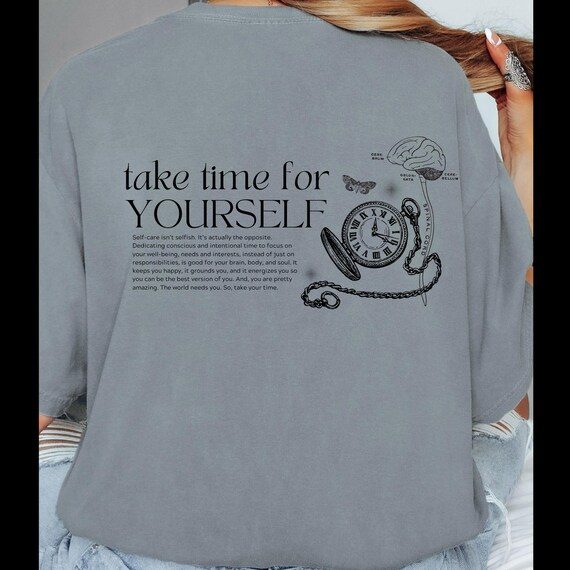
The Guilt Problem: Where It Comes From
Somewhere between childhood and adulthood, most of us absorbed a message that equates rest with laziness. Productivity became the measure of personal worth. If you weren’t doing something — answering, responding, producing — you were wasting time. That belief system runs deep, and it doesn’t just affect how we work. It affects how we recover.
A 2023 study published in the Journal of Personality and Social Psychology found that people who described themselves as “busy” were perceived as having higher social status. Being overwhelmed became a badge of honor. But the researchers noted something else: those same “busy” individuals reported lower life satisfaction, more frequent health complaints, and weaker relationships.
The guilt around self-care isn’t accidental. It’s cultural conditioning. And it takes conscious effort to push back against it — not with grand gestures, but with small, repeated decisions to prioritize your own well-being alongside your responsibilities.
What Actually Happens When You Don’t Rest
Skipping rest doesn’t make you stronger. It makes you brittle. The body keeps a running tab of every skipped meal, every night of shallow sleep, every weekend spent catching up on work. Eventually, it collects.
Chronic stress triggers elevated cortisol levels, which over time can suppress immune function, disrupt sleep architecture, and contribute to cardiovascular strain. But beyond the clinical data, there’s a simpler truth most people recognize in themselves: when you’re depleted, you become a worse version of who you actually are. Shorter temper. Less patience. Fewer good ideas. More mistakes.
| Sign of Burnout | What It Feels Like | What It Actually Signals |
|---|---|---|
| Constant fatigue | Tired even after sleeping | Nervous system stuck in overdrive |
| Emotional numbness | Not sad, not happy — just flat | Protective shutdown from overstimulation |
| Irritability spikes | Snapping at small things | Depleted capacity for stress regulation |
| Decision paralysis | Can’t choose what to eat for dinner | Cognitive resources fully taxed |
| Loss of interest | Things you loved feel like chores | Reward circuits need recalibration |
| Physical tension | Jaw clenching, shoulder tightness | Body holding stress the mind won’t process |
None of these are character flaws. They’re warning signals from a system designed to protect you — if you’ll listen.
Self-Care Isn’t Bath Bombs — It’s Boundaries

The wellness industry has done a remarkable job of turning self-care into a shopping list. Buy this candle. Use this face mask. Download this meditation app. And while those things have their place, they miss the point if the underlying patterns don’t change.
Genuine self-care is structural. It’s saying no to the third social commitment this week. It’s turning your phone face-down during dinner. It’s deciding that the email can wait until morning. These choices don’t photograph well. They don’t make great Instagram stories. But they are the architecture of a life that doesn’t require constant recovery from itself.
When groups of friends come together for experiences like hen party spa days, the value isn’t just in the treatments. It’s in the permission the setting gives — permission to be still, to talk without agenda, to exist without performing. That’s what makes group spa experiences meaningful. Not the eucalyptus steam. The collective exhale.
Tip: If scheduling self-care feels impossible, start with micro-rest. Five minutes of silence before the day starts. A walk around the block without your phone. These aren’t compromises — they’re foundations.
Why Group Self-Care Hits Different
There’s research behind what most people feel instinctively: doing restful things with people you trust amplifies the benefit. A 2022 study from the University of Oxford found that synchronized relaxation activities — breathing together, stretching together, even sitting in warm water together — triggered stronger oxytocin responses than identical activities done alone.
This is part of why hen party spa ideas have moved so far beyond the old “night out” template. More groups are choosing thermal suites over nightclubs. More brides-to-be are asking for treatment packages instead of bar crawls. The shift isn’t about being boring. It’s about wanting to actually feel good the next morning — and remembering the conversations you had.
Planning a spa-focused gathering with friends creates a container for the kind of connection that usually gets crowded out. No one is checking their phone during a hot stone massage. No one is performing social energy in a sauna. The environment does half the work.
The Science of Slowing Down
Your autonomic nervous system operates in two primary modes. Sympathetic activation — fight or flight — gets all the attention. It’s the mode that powers deadlines, quick decisions, and reactive living. But parasympathetic activation — rest and digest — is where healing happens. Tissue repair. Memory consolidation. Emotional processing. Immune regulation.
Most adults spend a disproportionate amount of time in sympathetic mode. The result is a body that never fully recovers from its own stress responses. Heat therapy (saunas, steam rooms, warm baths) is one of the most studied methods for triggering parasympathetic activation. Skin temperature rises, blood vessels dilate, heart rate variability improves. The body reads these signals as safety.
Insight: Research from the Finnish Heart Study — tracking over 2,300 men across 20 years — found that regular sauna use (4-7 sessions per week) was associated with a 40% reduction in all-cause mortality compared to once-a-week use. Heat exposure isn’t pampering. It’s protective medicine with centuries of evidence.
This is why spa environments work on a level that goes beyond “feeling nice.” They’re triggering physiological processes that your body needs but rarely gets in the pace of ordinary life.
Planning Self-Care That Actually Works
Not all rest is equal. Scrolling social media for two hours registers as “doing nothing,” but your brain is processing thousands of micro-stimuli during that time. True rest requires low input and low demand. Here’s how different approaches stack up:
| Activity | Mental Load | Physical Recovery | Social Connection | Best For |
|---|---|---|---|---|
| Solo spa visit | Very low | High | None | Deep recharge after intense periods |
| Group spa day | Low | High | Strong | Hen parties, friend reunions, birthdays |
| Nature walk | Low | Moderate | Optional | Mental clarity, gentle movement |
| Reading (fiction) | Low-moderate | Low | None | Mental escape, imagination reset |
| Social media scroll | High (hidden) | None | Artificial | Procrastination — not actual rest |
| Cooking a slow meal | Moderate | Low | Optional | Grounding, sensory engagement |
When considering hen party spa ideas, the strongest options combine low mental load with high physical recovery and genuine connection. That’s the trifecta. Treatments that happen in shared spaces — relaxation lounges, thermal suites, group yoga — tend to score highest because they allow for presence without performance.
How to Actually Ask for What You Need
One of the hardest parts of self-care isn’t doing it. It’s communicating it. Telling your partner you need a Saturday alone. Telling your friends you’d rather do a spa day than a pub crawl. Telling your boss you’re taking your lunch break — the whole thing, away from your desk.
The language matters. “I need to recharge” works better than “I don’t want to come.” “I function better when I rest” works better than “I’m too tired.” Framing self-care as maintenance rather than avoidance makes it easier for others to respect — and easier for you to protect without guilt.

For group events — especially hen parties — this reframing is already happening naturally. The bride who says “I want us all to feel good, not just party hard” isn’t being difficult. She’s being honest about what celebration actually means to her. And the friends who support that? They usually end up having a better time too.
Perspective: Self-care isn’t about deserving rest. You don’t earn the right to breathe by being productive enough. Rest is a biological requirement, not a reward for good behavior. Treating it as optional is like treating sleep as optional — technically possible short-term, destructive long-term.
Building Rest Into Life, Not Around It
The problem with treating self-care as an event — something you schedule once a quarter — is that it positions rest as the exception to your real life. And anything that’s exceptional is easy to skip when things get busy.
A more sustainable approach treats rest as infrastructure. Daily anchors (a morning without screens, an evening walk), weekly practices (one evening that’s genuinely unscheduled), and seasonal rituals (a spa booking with friends, a solo weekend away). When rest is woven into the calendar with the same priority as meetings and deadlines, it stops feeling like an indulgence and starts feeling like what it is: a non-negotiable.
This is particularly relevant for groups planning celebrations. The best hen party spa ideas aren’t bolt-on extras. They’re the main event. Because the bride who arrives at her wedding rested, connected to her friends, and genuinely happy? She got there because someone prioritized experiences that restore rather than deplete.
What the Research Says About Spa-Based Wellness
A 2021 meta-analysis published in the International Journal of Environmental Research and Public Health reviewed 37 studies on spa therapy outcomes. Key findings included measurable improvements in sleep quality (reported in 89% of studies), reductions in self-reported anxiety (76% of studies), and decreases in musculoskeletal pain (82% of studies). These weren’t placebo effects — the physiological markers (cortisol levels, heart rate variability, inflammatory markers) shifted in tandem with reported well-being.
Heat therapies showed the strongest effects, followed by hydrotherapy and massage. The duration of benefit varied, but participants who engaged in spa-based wellness as part of a regular routine (monthly or more) maintained improvements over 6-12 month follow-up periods. One-off visits helped, but consistency is what changed trajectories.
This matters for anyone weighing self-care options. A single spa day is good. A pattern of regular rest is transformative. And when that pattern includes social connection — as it does with group spa visits — the benefits multiply. Shared relaxation strengthens relationships at the same time it restores individuals.
Rethinking Celebration Culture
Hen parties are a useful lens for a broader conversation about how we celebrate. The traditional model — loud, late, alcohol-heavy — works for some people, some of the time. But it’s not the only model, and for many, it’s not the best one. The rise of wellness-focused celebrations reflects a genuine shift in what people want from their landmark moments.
They want to remember them. They want to feel good during them. And they want to arrive at the next day — the wedding, the birthday, the milestone — feeling ready rather than recovering.
Good hen party spa ideas build around this principle. Thermal experiences, group treatments, shared meals, space for conversation. The celebration isn’t diminished by being quiet. It’s deepened by being intentional.
Frequently Asked Questions
Is it normal to feel guilty about taking time for myself?
Extremely normal, and also extremely unhelpful. Guilt around rest is a learned response, often rooted in cultural messaging that equates productivity with personal worth. Recognizing the guilt as conditioning — rather than as evidence that you’re doing something wrong — is the first step toward letting it go. Rest is a biological need, not a moral failing.
What makes hen party spa ideas better than traditional nights out?
They’re not inherently better — they serve a different purpose. Spa-based celebrations prioritize connection, presence, and physical well-being. Guests tend to have deeper conversations, feel more relaxed the following day, and report stronger bonding with the group. For brides who want to arrive at their wedding feeling restored rather than recovering, spa experiences are the stronger choice.
How often should I schedule dedicated self-care time?
Daily micro-practices (5-15 minutes of genuine rest) form the base. Weekly, one longer period of low-demand time — even two hours — makes a measurable difference. Monthly or quarterly, a more immersive experience (spa visit, nature retreat, full unplugged day) helps reset deeper patterns. The key is consistency over intensity.
Can self-care actually improve my relationships with others?
Consistently, yes. When you’re depleted, your capacity for patience, empathy, and emotional presence drops. Rested people listen better, react less defensively, and have more energy for the people they care about. Taking time for yourself isn’t taking time away from others — it’s ensuring you show up as someone worth being around.
What if I can’t afford spa treatments or expensive self-care?
Most effective self-care costs nothing. Silence, sleep, movement, sunlight, time in nature, unscheduled hours — these are free and backed by strong evidence. Spa experiences are one tool among many. The principle is the same regardless of budget: deliberately reducing input and demand on your nervous system so it can recover and function at its baseline capacity.
