Creating a Home Spa Experience: Products, Rituals & Atmosphere
The Science Behind Why Spa Rituals Work
Before choosing products or planning a sequence, it helps to understand what is actually happening in your body when a spa ritual “works.” The relaxation response is not vague or mystical — it is a measurable shift in autonomic nervous system activity. Warm water, pleasant scents, gentle touch, and reduced sensory input collectively trigger the parasympathetic branch (the “rest and digest” system) while suppressing the sympathetic branch (the “fight or flight” system).
Warm water immersion at 37 to 40 degrees Celsius causes peripheral blood vessels to dilate, reducing blood pressure and heart rate within ten minutes. The hydrostatic pressure of water against the body (even in a shallow bath) assists venous return, reduces joint stress by up to 90 percent, and creates a sensation of weightlessness that relaxes muscles held in tension patterns from sitting, standing, or exercise.
Scent triggers the limbic system — the emotional and memory centers of the brain — more directly than any other sense. A single inhalation of lavender essential oil measurably reduces salivary cortisol (the primary stress hormone) within 20 minutes. Eucalyptus opens bronchial passages and creates a cognitive association with cleanliness and freshness. Bergamot reduces anxiety markers in clinical studies. These are not placebo effects. They are neurochemical responses to specific volatile compounds interacting with olfactory receptors.
Touch — even self-administered touch like a face massage or body scrub — activates C-tactile afferent nerve fibers that transmit “pleasant touch” signals at a specific velocity (1 to 10 cm per second). This velocity range is why slow, deliberate massage strokes feel calming while rapid, rough rubbing feels agitating. Professional spa therapists are trained to work within this velocity window. At home, the principle is the same: slow, gentle, intentional touch signals safety to the nervous system.
Building Your Product Collection: What You Actually Need
The beauty industry thrives on convincing you that you need seventeen products for a proper self care routine. You do not. A genuinely effective home spa ritual requires six categories of products, and within each category, one well-chosen item is sufficient. What matters is the quality and suitability of each product, not the quantity.
Category one: a cleanser matched to your skin type. For dry or sensitive skin, a cream or milk cleanser with ceramides or hyaluronic acid base. For oily or combination skin, a gel cleanser with salicylic acid or niacinamide. For normal skin, a gentle foaming cleanser without sulfates. The cleanser removes surface oil, makeup, sunscreen, and environmental debris so that subsequent products contact clean skin rather than sitting on top of a layer of grime.
Category two: an exfoliant. Physical exfoliants (scrubs with sugar, salt, jojoba beads, or pumice) work through mechanical abrasion. Chemical exfoliants (AHA, BHA, PHA acids) work by dissolving the bonds between dead skin cells. For body use, physical scrubs are effective and satisfying — the tactile feedback of granules against skin is part of the ritual’s sensory experience. For facial use, chemical exfoliants are gentler and more uniform. Use exfoliants once or twice per week, not daily. Over-exfoliation strips the acid mantle and causes irritation, redness, and paradoxical oil overproduction.
Category three: a treatment mask. Clay masks (bentonite, kaolin, French green clay) absorb excess oil and tighten pores temporarily. Hydrating masks (sheet masks, cream masks with hyaluronic acid or aloe) add moisture to dehydrated skin. Multi-masking — applying clay to the T-zone and hydrating mask to cheeks simultaneously — addresses both concerns in one session. Leave masks on for 10 to 15 minutes, not longer. Extended application does not increase benefits and can actually dry out the skin as clay masks pull moisture from skin after the mask itself has dried.
Category four: a body treatment oil or serum. Jojoba oil, sweet almond oil, rosehip oil, or a blended body oil provides slip for massage and delivers lipid-soluble nutrients to the skin. Apply to damp skin immediately after bathing — the water on your skin acts as a carrier that helps the oil absorb rather than sit on the surface.
Category five: a moisturizer appropriate for the season. Lighter gel-creams in summer, richer balms or creams in winter. The moisturizer’s job is to seal the skin barrier after cleansing, exfoliation, and treatment — trapping hydration rather than adding it (that is the serum’s job). Look for ceramides, squalane, or shea butter in the top five ingredients for effective barrier repair.
Category six: a bath additive. Epsom salts (magnesium sulfate), colloidal oatmeal, bath oils, or botanical-infused bath soaks. Epsom salts at a concentration of 300 to 600 grams per standard bathtub provide transdermal magnesium absorption that relaxes muscles and may reduce inflammation. Colloidal oatmeal soothes irritated or eczema-prone skin. Bath oils create a film on the water surface that coats your skin as you exit, locking in moisture.
| Product Category | Dry / Sensitive Skin | Oily / Combination Skin | Normal Skin |
|---|---|---|---|
| Cleanser | Cream or milk (no sulfates) | Gel with salicylic acid | Gentle foam (sulfate-free) |
| Exfoliant | Sugar scrub or PHA acid | Salt scrub or BHA acid | Jojoba bead scrub or AHA |
| Mask | Hydrating cream or sheet mask | Clay mask (kaolin or bentonite) | Multi-mask or enzyme mask |
| Body Oil | Rosehip or marula oil | Jojoba oil (lightweight) | Sweet almond or argan oil |
| Moisturizer | Rich cream with ceramides | Gel-cream with niacinamide | Medium lotion with squalane |
| Bath Additive | Colloidal oatmeal + oil | Epsom salts + tea tree | Epsom salts + lavender oil |
The Ritual Sequence: A 90-Minute Home Spa Protocol
Professional spas follow deliberate sequences designed to maximize product efficacy and physiological response. This 90-minute home protocol mirrors what you would experience in a mid-to-high-end day spa, adapted for a standard bathroom.
Minutes 0 to 5 — Atmosphere setup. Light candles, start music or ambient sounds, set bathroom temperature (slightly warmer than comfortable — 23 to 25 Celsius), lay out products in order of use, set fresh towels within arm’s reach, pour and start filling the bath. This preparation phase is not optional. It creates a transition ritual that tells your brain: “work is over, recovery is beginning.” Without this transition, you carry your stressed mental state into the bath and spend the first twenty minutes mentally rehashing your day instead of releasing it.
Minutes 5 to 10 — Dry body brushing. Using a natural bristle brush with a long handle, brush skin in long strokes toward the heart, starting at the feet and working upward. Pressure should be firm but not painful — enough to create slight redness. Dry brushing exfoliates dead surface cells, stimulates lymphatic circulation, and creates a tingling sensation that heightens body awareness. Spend extra time on rough patches (elbows, knees, heels) and lighter pressure on sensitive areas (inner arms, neck).
Minutes 10 to 30 — Bath soak. Submerge to chest level in 38 to 40 Celsius water with your chosen bath additive already dissolved. Rest your head on a folded towel or bath pillow. Close your eyes or read — no phone screens. The blue light from screens triggers sympathetic nervous activation, which directly counteracts the relaxation you are building. Twenty minutes of immersion is the minimum for meaningful muscle relaxation and magnesium absorption from Epsom salts.
Minutes 30 to 40 — In-bath facial treatment. While still in the bath, apply your facial cleanser, rinse, then apply your treatment mask. The steam from the bath water opens pores and enhances mask penetration. Leave the mask on for the remainder of your bath time.
Minutes 40 to 55 — Body scrub and rinse. Stand in the emptying bath or step into the shower. Apply your body scrub in circular motions, working systematically from feet to shoulders. Spend 30 to 45 seconds on each body section. Rinse thoroughly with warm (not hot) water. The exfoliation combined with the prior 20 minutes of soaking means dead skin lifts away with minimal friction — the soak has done half the work already.
Minutes 55 to 70 — Body oil massage and self-massage. Pat skin until just damp (not dry), then apply body oil. Work it in with slow, deliberate strokes — remember the C-tactile fiber velocity window of 1 to 10 cm per second. Spend extra time on tension-holding areas: neck, shoulders, lower back, calves, feet. Use a tennis ball against the wall for trigger points in the upper back that your hands cannot reach. A foam roller on the floor works for lower back and IT band.
Minutes 70 to 80 — Facial skincare. Apply serum to face and neck (vitamin C in the morning routine, retinol or peptides for evening). Follow with moisturizer. Apply eye cream with ring finger (least pressure). If it is evening, skip the SPF; if morning, finish with SPF 30 or higher.
Minutes 80 to 90 — Cool down and hydrate. Dress in soft, clean loungewear. Drink 500ml of water (warm or room temperature, not cold — cold water can cause stomach cramping after prolonged heat exposure). Sit or recline for ten minutes without stimulation. This integration period allows your nervous system to stabilize in its parasympathetic state before re-engaging with the world.
Atmosphere: The Invisible Product
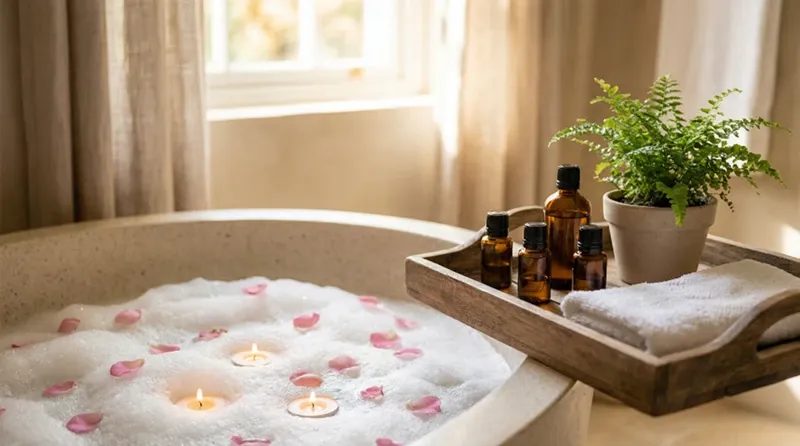
Professional spas invest heavily in atmosphere because they know it accounts for 30 to 40 percent of the perceived experience. The same facial treatment performed in a fluorescent-lit clinic versus a dim, scented, warm treatment room feels dramatically different — even though the products and technique are identical. Your home spa ritual benefits from the same atmospheric attention.
Lighting is the single most impactful atmospheric element. Replace overhead bathroom lights with candles (real flame, not LED) for the duration of your ritual. Candlelight operates in the 1,800 to 2,200 Kelvin color temperature range — significantly warmer than even “warm white” LED bulbs (2,700K). This ultra-warm light relaxes the pupils, reduces visual stimulation, and creates shadows that make the bathroom feel smaller, more enclosed, and more private. If you are uncomfortable with open flames near water, battery-operated candles with realistic flicker modes are an acceptable substitute.
Sound shapes the experience more than most people expect. Complete silence can feel stark and actually heighten awareness of external noises (traffic, neighbors, appliances). Nature sounds — rain, ocean waves, forest streams — mask external noise while providing a low-level auditory backdrop that the brain interprets as non-threatening. Ambient music without lyrics or strong rhythms works similarly. Avoid music with vocals, dramatic tempo changes, or familiar melodies — all of these activate the analytical brain rather than allowing it to rest.
Temperature matters beyond the bath water itself. A cold bathroom forces muscle tension as you undress and move between bath and shower. Preheat the room by running the shower hot for two minutes with the door closed before beginning your ritual. The steam also raises humidity, which benefits skin and respiratory passages. If your bathroom has a heated towel rail, warm your towels and robe in advance — wrapping yourself in a warm towel after a bath extends the relaxation effect rather than shocking you back to alertness.
Scent should be layered, not blasted. A single scent source at maximum intensity is overwhelming. Three subtle sources create a more natural, enveloping atmosphere: a diffuser running at low output with 4 to 6 drops of essential oil, a scented candle burning for at least 30 minutes before you enter (so the wax pool has formed and the throw has developed), and your bath additive providing a third layer from the water surface. Keep all three scents in the same family — all floral, all herbaceous, or all woody — to avoid olfactory confusion.
| Atmosphere Element | Budget Option | Mid-Range Option | Premium Option |
|---|---|---|---|
| Lighting | Tea light candles ($5 / 50 pack) | Soy pillar candles ($15 – $25) | Beeswax candles + dimmer switch ($40+) |
| Sound | Phone speaker + free app | Waterproof Bluetooth speaker ($30) | Built-in bathroom speaker system ($100+) |
| Scent | Essential oil on a cotton ball | Ultrasonic diffuser ($25 – $50) | Nebulizing diffuser + premium oils ($80+) |
| Temperature | Run shower hot before entering | Portable space heater ($30) | Heated towel rail + underfloor heating ($200+) |
| Textiles | Standard cotton towels | Turkish cotton or bamboo towels ($20 – $40) | Egyptian cotton 700gsm towels + robe ($80+) |
Weekly vs. Monthly Rituals: Building a Sustainable Routine
The 90-minute protocol described above is a monthly or bi-monthly event — a “deep reset” that mirrors a spa visit. Trying to do that every week will lead to burnout and schedule conflicts, which means you will abandon it entirely by month three. Sustainability beats intensity every time when it comes to self care routine ideas that actually stick.
A weekly mini-ritual of 20 to 30 minutes is the backbone of a maintainable practice. It includes a bath or extended shower (15 minutes), one product treatment (mask, scrub, or hair treatment — rotate weekly), and five minutes of post-bath moisturizing with body oil. This weekly session maintains the skin benefits and provides a reliable decompression point in your schedule without requiring significant time investment.
Daily micro-rituals take under five minutes and require no special setup. A 60-second face massage while applying morning moisturizer. Three drops of essential oil on the shower floor before stepping in (the steam activates the scent). Applying hand cream mindfully rather than absently — feeling the texture, noticing the scent, taking three slow breaths. These micro-rituals train the nervous system to access the parasympathetic state quickly, so the monthly deep ritual works faster because your body recognizes the cues.
Seasonal adjustments keep the routine responsive to your body’s changing needs. Winter self care routine ideas emphasize deeper moisturization (swap gel-cream for rich cream, add facial oil, use heavier body butter). Summer routines lighten up (gel moisturizers, lighter oils, focus on exfoliation to prevent clogged pores from sunscreen buildup). Spring and fall are transition periods where you assess what your skin needs and adjust gradually rather than switching everything at once.
For more self care routine ideas and in-depth guides on building a practice that fits your life, explore our blog. Learn about the philosophy behind our approach on the services page. And when you are ready to take your practice to the next level with professional support, book through our appointments page.
FAQ: Self Care Routine Ideas for Home Spa
A functional home spa collection costs between $80 and $200 for all six product categories (cleanser, exfoliant, mask, body oil, moisturizer, bath additive). Spending more buys nicer textures, scents, and packaging — which matter for the sensory experience — but the active ingredients in a $25 moisturizer and a $75 moisturizer are often identical. Invest in the products you use most frequently (cleanser, moisturizer) and save on occasional-use items (masks, scrubs).
Absolutely. Replace the bath soak with a 10-minute steam shower (close the bathroom door, run water at maximum warmth, and stand in the steam). Place a few drops of eucalyptus oil on the shower floor for aromatherapy. Do your body scrub in the shower. Apply your face mask before stepping in and let the steam enhance penetration. Every other step in the protocol works identically whether you have a tub or not.
Peppermint, rosemary, and citrus oils (lemon, grapefruit, wild orange) are stimulating rather than calming. They increase alertness, heart rate, and mental focus — the opposite of what you want for a relaxation ritual. Save these for morning showers when you need an energy boost. For evening relaxation, stick to lavender, chamomile, ylang ylang, sandalwood, or bergamot.
Set explicit boundaries: tell household members your start and end times. Put your phone on airplane mode — not silent, airplane mode. Lock the bathroom door. If you have young children, schedule your ritual during a partner’s dedicated childcare time, after bedtime, or during a weekend nap. The ritual’s effectiveness depends partly on the certainty that you will not be interrupted. Even the possibility of interruption keeps the sympathetic nervous system partially active.
In terms of active ingredient concentration, the gap has narrowed significantly. Drugstore brands like CeraVe, The Ordinary, and Eucerin use the same ingredients (hyaluronic acid, ceramides, niacinamide, retinol) as prestige brands at comparable concentrations. Where prestige products genuinely differ is texture, scent formulation, and packaging — the sensory experience. Since a spa ritual is partly about sensory pleasure, the “better” texture and scent of a prestige product can meaningfully enhance the experience. But the skin benefits are largely comparable.
