Creating a Luxury Spa Experience at Home: Products, Rituals & Atmosphere
A luxury spa experience does not require a resort reservation. It requires intention. The right products, the right sequence, and the right atmosphere — combined with two uninterrupted hours — can transform your bathroom into something that rivals a professional session. The secret is not spending more money. It is spending more attention on what you already have and filling the gaps with precision rather than excess.
Professional spas sell two things: treatment and environment. The treatment — facial, massage, body wrap — accounts for roughly half the experience. The other half is everything surrounding it: the temperature of the room, the scent in the air, the weight of the robe, the sound (or absence of sound) in the background. Most people trying to recreate a luxury spa experience at home focus entirely on the treatment and ignore the environment. That imbalance is why the result feels like skincare in a bathroom rather than a spa session at home.
I have visited spas across four continents over the past twenty years. From Japanese onsen to Scandinavian thermal circuits to Moroccan hammams to Balinese open-air pavilions. What links the best of them is not product quality (though that matters) or treatment skill (though that matters too). It is the totality — the way every sensory input aligns toward the same emotional target. You can achieve this at home. It takes planning, not wealth.
The goal of this guide is to help you build a luxury spa experience from the ground up — starting with atmosphere, moving through products, and finishing with rituals that turn an evening alone into something you anticipate all week.
Setting the Atmosphere — Sensory Design for Your Space
Atmosphere is not decoration. It is the systematic management of five sensory channels: sight, sound, smell, touch, and temperature. Professional spas invest heavily in controlling all five simultaneously. At home, you control the same channels — just within a smaller space and a tighter budget. The principles are identical.
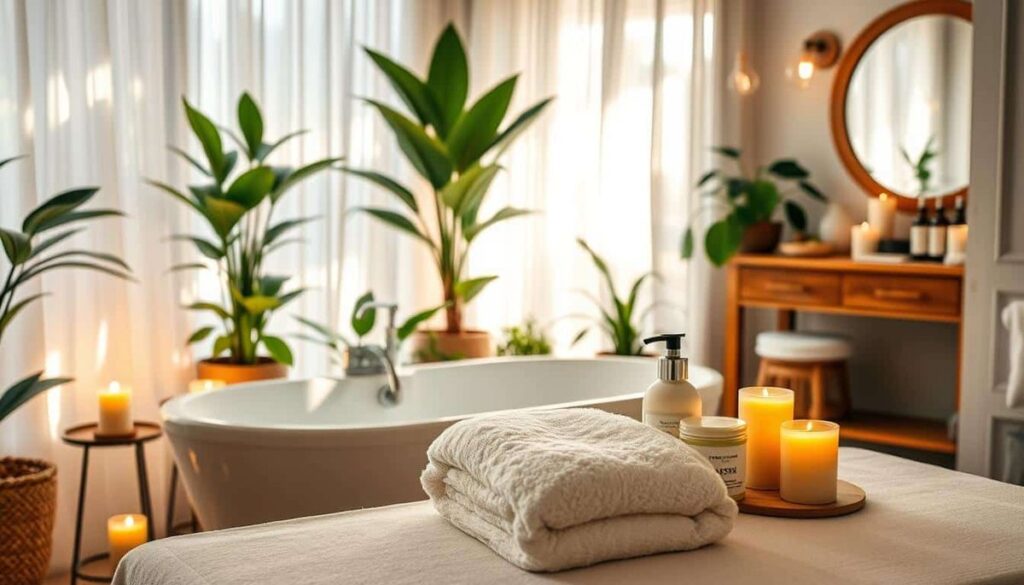
Lighting sets the emotional baseline for your luxury spa experience. Overhead bathroom lights — typically 4000K to 5000K fluorescent or LED — are designed for task visibility, not relaxation. They cast sharp shadows, flatten skin texture, and signal alertness to your nervous system. The fix is simple: turn them off. Replace with candles (real or battery-operated), a salt lamp, or a single low-wattage warm bulb (2200K to 2700K) placed below eye level. The shift from overhead to peripheral lighting changes the room’s emotional register immediately.
Scent is the most direct sensory pathway to the limbic system — the brain region governing emotion and memory. This is not metaphorical. Olfactory signals bypass the thalamus and reach the amygdala within two synaptic connections. A specific scent associated with relaxation triggers a measurable cortisol reduction within minutes. The practical implication: choose one or two signature scents for your spa ritual and use them consistently. Lavender and eucalyptus are classics for good reason — both have documented effects on parasympathetic nervous system activation.
Insight: The single most effective atmospheric upgrade for a home spa is silence. Not music — silence. Professional spas use ambient soundscapes because they have equipment noise, hallway traffic, and adjacent rooms to mask. Your bathroom at home has none of those problems. Two hours of genuine quiet — phone off, notifications silenced, door closed — creates a sensory environment that no playlist matches. If silence feels uncomfortable, try a white noise machine at the lowest audible setting.
Temperature deserves specific attention. A cold bathroom kills any spa atmosphere before products ever touch your skin. Run a hot shower for 3 to 5 minutes before your session begins — with the door closed. The steam raises both air temperature and humidity. Warm towels (10 minutes in the dryer, or a towel warmer if you are investing in equipment) add a tactile dimension that signals luxury to your body more directly than any product application.
Sound, if you choose it, should be continuous and unvarying. Avoid playlists — song changes create micro-interruptions. Avoid music with lyrics — language processing activates cognitive centers you are trying to quiet. Nature recordings (rain, ocean, forest) work because they are acoustically random and semantically empty. Your brain registers them as safe background and stops monitoring. A single 2-hour ambient track on repeat (yes, repeat — the repetition itself becomes invisible) is better than a curated 2-hour playlist of varied tracks.
Products That Matter — Quality Over Quantity
The product industry wants you to believe you need twelve steps and twenty products for a proper home facial. You do not. Professional facialists use 4 to 6 products in a standard session. The rest of the 60 minutes is technique, massage, and time — allowing active ingredients to penetrate and work. Your home ritual should follow the same logic: fewer products, better quality, longer application times.
Cleansing oil or balm is the foundation. Before any treatment product touches your skin, the surface needs to be genuinely clean — not just soap-washed, but stripped of sunscreen, makeup residue, and accumulated sebum. An oil cleanser dissolves these oil-soluble layers without disrupting the skin barrier. Massage the cleanser into dry skin for at least 60 seconds. This is not a rinse-and-go step. The massage itself increases circulation to the face, which enhances the effectiveness of every product that follows.
Exfoliation — chemical or physical — comes second. Chemical exfoliants (AHA, BHA) work by dissolving the bonds between dead skin cells. Physical exfoliants (scrubs, brushes) work by mechanical removal. For a luxury spa experience at home, chemical exfoliation delivers more consistent results with less risk of micro-tears or irritation. A 10-minute mask with 8-10% glycolic acid achieves what a scrub attempts, without the mechanical damage. Leave-on time matters here: the product needs minutes to work, not seconds.
Treatment masks represent the core of your ritual. This is where you invest the most time and the most money. A quality mask — whether hydrating (hyaluronic acid, ceramides), brightening (vitamin C, niacinamide), or firming (peptides, retinol) — needs 15 to 20 minutes of contact time. Professional spa treatments build entire sessions around this window, adding scalp massage, hand treatment, or foot soaking while the mask works. You should do the same — the mask is working while you attend to other body zones.
Body care in a spa context means more than shower gel. A salt or sugar body scrub applied to damp skin before soaking removes dead surface cells and allows moisture to penetrate. Follow with a body oil applied to still-damp skin — the oil locks in hydration more effectively than applying to dry skin. Specific areas that benefit most: elbows, knees, heels, and the backs of hands. These are the zones that age visibly and respond dramatically to consistent care.
The Ritual Sequence — Timing Your Home Spa Session
Professional spas follow a specific treatment order that maximizes product efficacy and client relaxation. The sequence is not random — it follows dermatological logic. Cleansing opens pores. Exfoliation removes barriers to absorption. Treatment products deliver active ingredients to freshly prepared skin. Moisturizing seals everything in. Disrupting this order reduces results.
A full home spa session takes approximately 90 to 120 minutes. This is not a rushed 30-minute routine squeezed between dinner and bedtime. It is a dedicated block of time that you protect like a meeting. If you cannot commit two hours, reduce the scope — a 60-minute facial-only session is better than a rushed full-body attempt that leaves you stressed about time rather than relaxed from treatment.
The opening 15 minutes should focus exclusively on environment and transition. Run the steam. Light the candles. Set the temperature. Brew a cup of herbal tea (chamomile or peppermint — both support relaxation through different mechanisms). Change into a robe. This transition period signals to your nervous system that the mode has shifted. Jumping straight from work email to face mask skips the psychological preparation that makes the physical treatment effective.
Bath soaking — if you have a tub — occupies the center of the ritual. Water temperature should be 37 to 39 degrees Celsius (98 to 102 Fahrenheit). Above 40 degrees, your cardiovascular system works harder than it should during a relaxation session. Twenty to thirty minutes of immersion at the correct temperature reduces cortisol, eases muscle tension, and creates the sensory baseline for subsequent body treatment. Bath additives — Epsom salts (magnesium sulfate), colloidal oatmeal, or essential oils — add therapeutic dimensions without complexity.
The approach to self-care rituals should prioritize consistency over intensity. A weekly 90-minute session delivers better long-term skin results and stress management than a monthly 3-hour marathon. Your body responds to regular stimuli by adapting — regular exfoliation trains cell turnover, regular hydration strengthens the moisture barrier, regular relaxation lowers baseline cortisol levels.
Tip: Keep a dedicated basket or tray with all your spa products pre-assembled. The act of gathering products from different cabinets and drawers breaks the ritual flow and introduces decision-making into a space that should be decision-free. Professional spas lay out every product before the client enters the room. Do the same.
Building Your Product Kit — Investment Guide
Budget allocation for a home spa kit should follow the 40-30-20-10 rule. Forty percent of your budget goes to treatment products (masks, serums, active exfoliants) — these are the highest-impact items with the most variable quality. Thirty percent goes to tools and environment (candles, towels, a gua sha stone, bath salts). Twenty percent covers basic products (cleanser, body scrub, moisturizer). Ten percent covers replaceable consumables (cotton pads, sheet masks, hair clips).
You do not need to build everything at once. Start with the treatment mask and the cleansing oil — these two products alone enable a meaningful 45-minute facial ritual. Add a chemical exfoliant in month two. Add body care products in month three. Building gradually prevents the common mistake of buying everything simultaneously, feeling overwhelmed by the product count, and abandoning the practice within weeks.
Product sourcing matters for a luxury spa experience. Professional-grade products from brands that supply actual spas often outperform consumer-marketed “luxury” products at similar price points. The difference is ingredient concentration — professional products contain higher percentages of active ingredients because they are designed to deliver results in a single session, not over 30 days of daily use. Ask your local spa which product lines they use, then check if those brands sell directly to consumers.
Storage conditions affect product efficacy. Vitamin C serums degrade with light and air exposure — store in a dark cabinet, not on a sunlit shelf. Retinol products break down in heat — room temperature is fine but a medicine cabinet above a heat vent is not. Oil-based products last longer than water-based ones because bacteria require water to proliferate. Check expiration dates and replace opened products according to the PAO (Period After Opening) symbol — the small icon showing months of safe use after first opening.
Advanced Techniques You Can Do at Home
Facial massage is the most underrated skill in home spa practice. Five minutes of structured facial massage using a gua sha tool or your fingertips increases blood flow, reduces puffiness through lymphatic drainage, and enhances product absorption by up to 30% according to clinical studies. The technique is simple: upward and outward strokes, starting at the center of the face and moving toward the ears and jawline. Never drag downward against gravity. Use enough oil or serum to ensure the tool or fingers glide without pulling the skin.
Steam treatment between cleansing and masking opens pores and softens the skin surface. You do not need a professional steamer — a bowl of hot water (not boiling) with a towel draped over your head achieves the same result. Five minutes of steam exposure is sufficient. Longer exposure risks dehydrating the skin’s outer layers. Adding two drops of eucalyptus or tea tree essential oil to the water creates a sinus-clearing inhalation benefit simultaneous with the skin treatment.
Eye treatment often gets skipped in home routines because people assume it requires specialized products. It does not. A cold compress (two spoons chilled in the refrigerator for 10 minutes) reduces puffiness through vasoconstriction — the cold causes blood vessels to narrow, reducing fluid accumulation. Apply for 5 minutes per eye during your mask time. Follow with a hydrating eye cream applied with your ring finger (lightest touch pressure) in a tapping motion around the orbital bone.
Scalp massage during your treatment mask window adds unexpected value to a luxury spa experience. The scalp contains thousands of nerve endings that respond to pressure. Five minutes of firm circular massage across the scalp reduces tension headaches, stimulates hair follicle blood flow, and activates the parasympathetic nervous system — the “rest and digest” branch that opposes stress responses. Use a few drops of jojoba oil on your fingertips to reduce friction. This is among the techniques that professional spa therapists incorporate into every treatment session.
Verdict: A luxury spa experience at home is not about replicating a commercial spa. It is about creating a personal sanctuary calibrated to your specific preferences, your skin’s needs, and your schedule. Professional spas serve everyone acceptably. Your home spa serves you perfectly — because you designed it, you curate the products, and you control every variable. That level of personalization is something no professional establishment can match, regardless of its price point.
Seasonal Adjustments to Your Routine
Your skin changes with the seasons, and your home spa routine should change with it. Winter air — cold outside and heated inside — strips moisture from the skin barrier. Winter spa sessions should emphasize hydration: richer masks, heavier oils, longer soak times with moisturizing bath additives. Exfoliation frequency can decrease because dry winter air already accelerates surface cell turnover through dehydration.
Summer sessions shift toward oil control and sun damage repair. Lighter gels replace heavy creams. Vitamin C and niacinamide masks address hyperpigmentation from UV exposure. Cooling elements — chilled jade rollers, peppermint in the bath, cold towel compresses — provide both therapeutic and comfort benefits during warm months. Exfoliation can increase slightly to manage the faster cell turnover that heat and humidity promote.
Spring and autumn are transitional — ideal times to introduce new products or adjust concentrations. A retinol product introduced in autumn has all winter to build tolerance before UV exposure increases. A brightening serum started in spring prepares skin for summer’s increased melanin activity. Timing product introduction to seasonal transitions follows the same logic that dermatologists use when building treatment protocols for their patients.
Regardless of season, the atmospheric elements of your ritual remain consistent. Candles, temperature management, silence or ambient sound, warm towels — these are season-independent. The sensory container you build around your treatment is the constant. The products inside that container adapt to what your skin needs that month.
Frequently Asked Questions
How often should I do a full home spa session?
Once per week is the sweet spot for most skin types. This frequency allows active exfoliants to work without over-stripping the skin barrier. Twice weekly is appropriate for oily or resilient skin types during high-stress periods. Less than twice monthly loses the cumulative benefit — your skin needs regular stimulation to maintain the improved texture and hydration that spa treatments provide. Consistency at a sustainable frequency beats intensity at an irregular schedule every time.
What is the minimum budget to start a home spa routine?
Under $50 covers the essentials: a cleansing oil ($12-18), a chemical exfoliant ($15-25), a treatment mask ($10-20), and a pack of candles ($5-8). You likely already own towels, a robe, and a bathtub or shower. The investment grows over time as you add tools (gua sha, $15-30) and body products (scrub, oil, bath salts). The most expensive item worth buying early is a towel warmer ($30-60) — its impact on the experience disproportionately exceeds its cost.
Can I do a spa session if I have sensitive or reactive skin?
Absolutely — with modified product choices. Replace glycolic acid exfoliant with a gentler lactic acid or PHA (polyhydroxy acid) formula. Use fragrance-free products throughout. Reduce mask contact time to 10 minutes instead of 20. Skip physical scrubs entirely — sensitive skin reacts poorly to mechanical exfoliation. The atmospheric elements (lighting, temperature, sound, towels) work identically for all skin types. Patch test any new product 48 hours before incorporating it into your full routine.
Is it better to do a home spa session in the morning or evening?
Evening is better for three reasons. First, your skin repairs and regenerates most actively during sleep — applying treatment products before bed maximizes their working window. Second, exfoliating acids increase UV sensitivity, so applying them before sun exposure is counterproductive. Third, the relaxation component translates directly into better sleep quality when the session precedes bedtime by 30 to 60 minutes. Morning sessions work for hydrating-only rituals but should skip active exfoliants and retinol.
How do I make my home spa feel different from my regular skincare routine?
The distinction is environment, not products. Your daily skincare routine uses similar products in a bathroom with overhead lights, while standing, probably before or after rushing somewhere. A spa session uses the same product categories in a transformed space — low light, warm air, comfortable position (seated or reclined), phone silenced, time protected. Add physical elements you do not use daily: warm towels, a face massage, a bath soak, a scalp treatment. The products overlap with your daily routine. The experience does not.
